
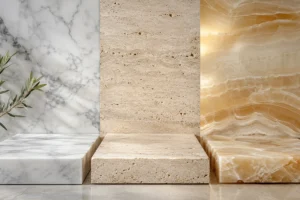



Natural stone has long been valued for its durability, distinctive appearance, and architectural versatility. From commercial buildings and luxury residences to hotels, public developments, and large-scale construction projects, materials such as marble, travertine, and onyx can add both functional and visual value.
However, selecting natural stone for construction projects is not simply a matter of choosing the most attractive color or pattern. Large projects require a structured approach that considers technical specifications, application, quality, availability, quantity, finishing, and procurement requirements.
For professional buyers and project teams, making the right material decision at the beginning can help reduce procurement risks, improve consistency, and ensure that the selected stone performs as expected throughout the project.
1. Start With the Application
The first step in choosing natural stone is understanding where and how the material will be used.
Different applications require different characteristics. A stone suitable for an interior feature wall may not be the ideal choice for exterior cladding or high-traffic flooring.
Common applications include:
- Exterior façades
- Interior walls
- Flooring
- Staircases
- Hotel and hospitality interiors
- Countertops and surfaces
- Bathrooms
- Feature walls
- Commercial spaces
- Luxury residential projects
- Landscaping and outdoor areas
Before selecting a stone, define the intended application and its technical requirements. This provides a clear foundation for evaluating suitable materials.
2. Consider Marble for Premium Architectural Applications
Marble is widely used in high-end architecture because of its distinctive patterns, natural veining, and wide range of colors.
It can be suitable for:
- Luxury residential projects
- Hotels and hospitality spaces
- Interior flooring
- Wall cladding
- Reception areas
- Staircases
- Feature walls
- Decorative architectural elements
For large projects, however, appearance should be evaluated alongside technical specifications. Buyers should consider slab or tile dimensions, thickness, finish, color consistency, and the availability of sufficient quantities.
When purchasing marble in bulk, consistency between batches can be an important procurement consideration.
3. Consider Travertine for Versatile Construction Applications
Travertine is another popular natural stone for architectural and construction projects. Its distinctive texture and neutral color palette make it suitable for a wide variety of design styles.
Depending on the specification and application, travertine can be used for:
- Building façades
- Exterior walls
- Flooring
- Interior walls
- Landscaping
- Staircases
- Commercial developments
- Residential construction
For project procurement, buyers should pay attention to surface finish, thickness, dimensions, color range, and the intended installation method.
The right specification can make travertine a practical option for projects that require both architectural character and material versatility.
4. Choose Onyx for Distinctive Interior Design
Onyx is particularly recognized for its dramatic colors, natural patterns, and distinctive appearance. It is often selected for premium interiors where the stone itself becomes an important design feature.
Typical applications include:
- Feature walls
- Reception areas
- Luxury interiors
- Hospitality projects
- High-end residential developments
- Decorative surfaces
- Statement architectural elements
Because onyx is frequently selected for visual impact, project teams should carefully evaluate pattern, color, slab characteristics, dimensions, and finishing requirements before placing a large order.
For high-end projects, selecting and approving the material before bulk procurement can help ensure that the final installation achieves the intended visual result.
5. Evaluate Thickness and Dimensions
One of the most important technical considerations when sourcing natural stone is thickness.
Stone thickness should be selected according to the intended application, installation method, structural requirements, and project specifications.
Buyers should clearly define:
- Required thickness
- Length and width
- Slab or tile format
- Dimensional tolerances
- Calibration requirements
- Cutting requirements
Large construction projects often involve significant quantities of stone, so consistency in dimensions can simplify installation and reduce material waste.
Providing detailed technical specifications to the supplier before quotation can also result in more accurate pricing and production planning.
6. Pay Attention to Surface Finish
The same type of natural stone can have a very different appearance and performance depending on its surface finish.
Common finishes may include:
- Polished
- Honed
- Brushed
- Tumbled
- Flamed
- Sandblasted
- Natural or textured finishes
The appropriate finish depends on the application, design concept, maintenance requirements, slip resistance considerations, and project specifications.
For example, a polished surface may be appropriate for certain premium interior applications, while textured finishes may be considered for specific exterior or architectural uses.
7. Define Quality Requirements Before Ordering
For large-scale procurement, the word “quality” should be translated into clear and measurable specifications.
Instead of simply requesting “high-quality marble” or “premium travertine,” buyers should define the characteristics that matter to the project.
These may include:
- Stone type
- Color range
- Pattern and veining
- Thickness
- Dimensions
- Surface finish
- Visual grading
- Acceptable variations
- Quantity
- Packaging requirements
Clear specifications create a shared understanding between buyer and supplier and help reduce uncertainty during production and delivery.
8. Consider Color and Pattern Consistency
Natural stone is a natural material, which means variation in color, texture, and veining is part of its character.
For large projects, however, the acceptable level of variation should be discussed before procurement.
This is especially important for:
- Hotel projects
- Large residential developments
- Commercial buildings
- Lobby and reception areas
- Feature walls
- Large flooring installations
For visually sensitive applications, buyers may request samples, reference slabs, or approved material selections before confirming a bulk order.
This can help establish a clear visual benchmark for the project.
9. Think About Quantity and Long-Term Availability
Large construction projects can require substantial quantities of the same material.
Before selecting a specific stone, procurement teams should consider whether the required quantity can be supplied consistently and whether additional material will be available if the project expands or replacement pieces are required.
This is particularly important for projects with multiple construction phases.
A reliable supplier should be able to discuss:
- Available quantities
- Production capacity
- Material consistency
- Lead times
- Future supply possibilities
- Packaging and shipment requirements
Planning these factors early can make large-scale procurement significantly more efficient.
10. Packaging Matters in International Stone Procurement
Natural stone is a high-value and heavy construction material. Appropriate packaging is therefore an important part of the supply process.
Depending on the product and transportation method, packaging may need to address:
- Protection from impact
- Moisture considerations
- Edge protection
- Secure loading
- Handling requirements
- Container optimization
- International transportation
For international B2B orders, packaging requirements should be agreed before production and shipment preparation.
Customized packaging can also be considered when the buyer has specific handling, branding, or transportation requirements.
11. Balance Quality With Project Budget
The most expensive stone is not necessarily the best choice for every project.
A professional procurement strategy focuses on finding the right balance between:
Material quality + technical performance + visual requirements + availability + total cost
A suitable stone should meet the project’s technical and aesthetic requirements without creating unnecessary procurement costs.
For large projects, comparing different materials and specifications before placing an order can help procurement teams identify a more commercially efficient solution.
12. Work With a Reliable Natural Stone Supplier
The supplier you choose can be just as important as the material itself.
A professional natural stone supplier should be able to provide clear information about:
- Material specifications
- Dimensions
- Thickness
- Finishing options
- Quality standards
- Available quantities
- Packaging
- Custom requirements
- Commercial terms
- International supply
For large-scale projects, communication and specification accuracy are particularly important because even small inconsistencies can become significant when multiplied across thousands of square meters.
Marble, Travertine, or Onyx: Which Should You Choose?
There is no single natural stone that is best for every construction project.
The right choice depends on the project’s purpose.
| Material | Common Strengths | Typical Applications |
|---|---|---|
| Marble | Premium appearance, distinctive veining, architectural versatility | Luxury interiors, flooring, walls, hotels, residences |
| Travertine | Natural texture, versatility, architectural character | Façades, flooring, walls, landscaping, construction |
| Onyx | Dramatic patterns, unique appearance, premium visual impact | Feature walls, luxury interiors, hospitality projects |
The best material is the one that meets the project’s technical, aesthetic, commercial, and supply requirements.
Final Checklist for Natural Stone Procurement
Before placing a large natural stone order, make sure the following points have been defined:
- Application: Where will the stone be installed?
- Material: Marble, travertine, onyx, or another stone?
- Dimensions: What size is required?
- Thickness: What thickness is specified?
- Finish: Which surface finish is required?
- Quality: What quality criteria must be met?
- Color: What level of color variation is acceptable?
- Pattern: Is specific veining or pattern consistency required?
- Quantity: What is the total project requirement?
- Packaging: Are there specific packaging requirements?
- Customization: Are cutting or fabrication services required?
- Delivery: What is the destination and required delivery schedule?
Having these details ready can make the quotation, sourcing, production, and delivery process significantly more efficient.
Conclusion
Choosing natural stone for construction projects requires a combination of architectural judgment, technical evaluation, and professional procurement planning.
Marble can be an excellent option for premium interiors, travertine offers versatility across a wide range of architectural applications, and onyx can create distinctive visual impact in high-end spaces. However, the right choice ultimately depends on the project’s specifications, application, quality requirements, quantity, budget, and supply conditions.
For contractors, developers, architects, distributors, and professional procurement teams, working with a supplier that understands these requirements can simplify the sourcing process and help ensure consistent material supply.
At Foolad Sazeh Artin Pishro, we support B2B buyers with natural stone and building material sourcing based on project-specific requirements, including material selection, dimensions, thickness, finish, quality, quantities, and customized packaging.
Have a natural stone requirement for your next project?
Request a Quote and share your specifications with our team.